- Home
- Seeds: Tomatoes
- Trophy
Variety characteristics
- Color
- Red
- Growing habit
- Indeterminate
- The growing season
- Mid-early
- Fruit type
- Beefsteak
- Leaf type
- Regular
- Package size
- 10 seeds
- Fruit size
- Medium-fruited
Trophy
Product available
2.70 EUR
per packet · Seeds per packet: 10
Note: Orders will be shipped starting on October 1, 2026, in the order in which they were placed.
Color
Red
Growing habit
Indeterminate
The growing season
Mid-early
Check delivery methods and prices🇵🇱 Poland
Estimate for 1 package of this product, excluding other cart items and coupons.
Bank Transfer / Online payment
- Personal collection0.00 EUR
- Poczta Polska2.40 EUR
- Kurier DPD3.87 EUR
- DPD Pickup2.73 EUR
- Kurier InPost5.15 EUR
- InPost Paczkomaty4.41 EUR
Cash on delivery
- Kurier DPD5.02 EUR
- Kurier InPost5.38 EUR
- InPost Paczkomaty5.79 EUR
Cash
- Personal collection0.00 EUR
This is a delivery cost preview. Confirm the country, delivery and payment in the next steps.
The Trophy tomato is one of the historic varieties, introduced to the market in 1870 by Colonel George E. Waring Jr., who was based in Rhode Island. Its history dates back even further, to 1847, when Dr. Hand, a physician from Baltimore, began experimenting with tomato crossbreeding. After 23 years of selection and stabilization, “Trophy” became one of the first commercial varieties to gain widespread recognition in the U.S.
Waring sold seeds of this variety in an unusual way, organizing a national contest in which participants could purchase seeds for 25 cents each or $5 for 20 seeds—which was a large sum at the time. Trophy quickly became popular and was recognized as one of the finest achievements in tomato breeding. It was advertised as a variety with large, smooth fruits that ripened early, had excellent flavor, and were ideal for both fresh consumption and canning.
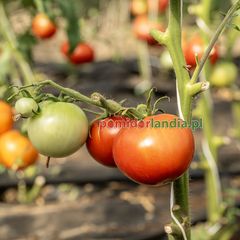
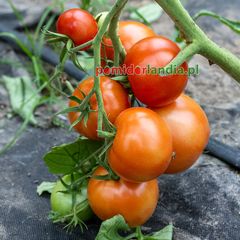
The ‘Trophy’ variety is characterized by medium-sized, flattened, red fruits weighing approximately 120–340 grams. These fruits are firm, juicy, yet sturdy, with a delicately sweet flavor, making them versatile for both salads and preserves. The plants have regular-type leaves, are tall, and require staking or trellising. This variety takes about 75 days from planting to maturity.
Despite its immense popularity at the turn of the 19th and 20th centuries, “Trophy” lost its prominence after the 1920s. Nevertheless, this variety played a key role in the development of many other popular tomato varieties over the next 25 years.
Waring sold seeds of this variety in an unusual way, organizing a national contest in which participants could purchase seeds for 25 cents each or $5 for 20 seeds—which was a large sum at the time. Trophy quickly became popular and was recognized as one of the finest achievements in tomato breeding. It was advertised as a variety with large, smooth fruits that ripened early, had excellent flavor, and were ideal for both fresh consumption and canning.
The ‘Trophy’ variety is characterized by medium-sized, flattened, red fruits weighing approximately 120–340 grams. These fruits are firm, juicy, yet sturdy, with a delicately sweet flavor, making them versatile for both salads and preserves. The plants have regular-type leaves, are tall, and require staking or trellising. This variety takes about 75 days from planting to maturity.
Despite its immense popularity at the turn of the 19th and 20th centuries, “Trophy” lost its prominence after the 1920s. Nevertheless, this variety played a key role in the development of many other popular tomato varieties over the next 25 years.
You can see for yourself just how popular “Trophy” was by looking at Dreer’s 1872 catalog. The variety was featured in its own advertisement, and the seeds were offered in several quality grades. This catalog gives a glimpse of the enthusiasm for this new tomato in the 19th century.
Variety characteristics
- Color
- Red
- Growing habit
- Indeterminate
- The growing season
- Mid-early
- Fruit type
- Beefsteak
- Leaf type
- Regular
- Package size
- 10 seeds
- Fruit size
- Medium-fruited