Bonny Best is a classic variety with a history dating back over a century. Historical accounts link it to George W. Middleton of Pennsylvania and a selection from “Chalk’s Early Jewel.” The Stokes Company offered it in 1908; in the decades that followed, it became famous as a versatile tomato.
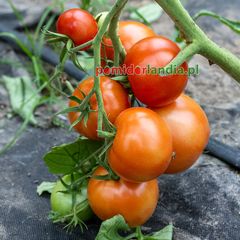
The plant is tall (indeterminate) with regular leaves, so it requires staking and support. It has vigorous growth and good foliage, which protects the fruit from sunscald. The variety is classified as mid-early—the first harvest begins about 75 days after transplanting the seedlings.
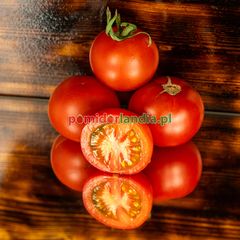
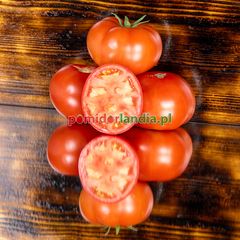
Bonny Best’s fruits are spherical to slightly flattened in shape, deep red in color, and have smooth skin without green discoloration near the stem. They typically weigh between 120 and 200 grams, and their flesh is firm, juicy, and meaty, with few seeds. The flavor is classically tomato-like, with a perfect balance of sweetness and acidity. Thanks to this combination of characteristics, the tomatoes are very versatile—they work wonderfully in salads and sandwiches, as well as in sauces, passata, preserves, and canned goods.
Compared to other varieties available at Pomidorlandia,
Bonny Best stands out for its historic lineage, consistent yield, and versatility. Compared to early varieties such as “
Stupice
” or “
Slava
,” it ripens slightly later but offers larger, meatier fruits. When compared to beefsteak varieties, however, it produces smaller but more uniform and practical tomatoes.
“
Bonny Best” is a variety that has delighted gardeners for over a century with its reliability and flavor—a classic that works well in every garden and on every table.