

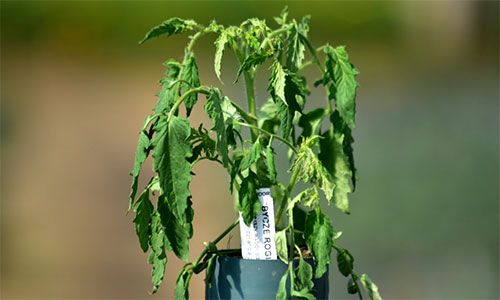
Transporting plants is extremely stressful for them, and this stress begins the moment a seedling is removed from the soil. The roots are damaged at that point, and even though most of them remain within the root ball, the plant immediately begins to wilt. The speed of the wilting process depends on the plant’s structure. There are two extreme types: the first, traditional type—a strong plant with a thick stem and thick, tough leaves. At the other end of the spectrum are plants described as “spindly-stemmed”—these plants are very weak, stunted, and have twisted leaves. They simply look terrible throughout the entire growing season. Typical examples of this type include our Opalka (Bull’s Horns) and the entire Buffalo Heart family. To give you an idea of how quickly these plants lose their turgor (cell firmness), we’ve prepared a few videos. We invite you to check them out. Enjoy watching! If you like them, we’ll record more :)
To start, we’ll show you how quickly plants lose turgor (or, colloquially, how they wilt). We pull a seedling out of the growing medium and start the timer. The videos below show the behavior of two different varieties (traditional and limp-stemmed) over the course of an hour; the footage has been significantly sped up. As an example of a limp-stemmed plant, we chose the “Bycze rogi” Opalka variety:
Your browser does not support the video tag.
When the cutting arrives via shipment, place it in the shade and put it in water as soon as possible. The process of regaining turgor is much slower than the process of losing it. The video below shows the behavior of an Opalka “Bycze rogi” plant—which belongs to the limp-stemmed type—over exactly two hours (120 minutes) starting from a state of complete wilting, when we place the cutting in water: